
Search
 English


Soft-pack battery cells, characterized by their lightweight, flexible, and high-energy-density designs, have become pivotal in advancing electric vehicles (EVs), portable electronics, and energy storage systems. However, their safety and durability remain critical challenges due to the inherent vulnerabilities of aluminum-plastic composite casings under mechanical stress, thermal extremes, and environmental degradation. This article explores how material innovation and structural optimization synergistically enhance the safety and reliability of soft-pack casings, enabling their broader adoption in demanding applications.
1. Introduction
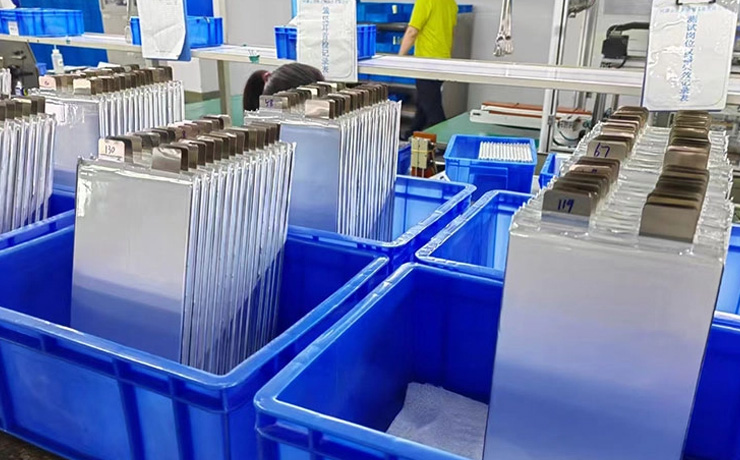
Soft-pack battery cells, enclosed in laminated aluminum-plastic films, offer superior energy-to-weight ratios compared to rigid cylindrical or prismatic cells. Their flexibility allows for efficient space utilization and customization, aligning with the trend toward compact, high-performance energy systems. Yet, the thin, multi-layered casing—typically comprising a nylon outer layer, aluminum foil, and polypropylene (PP) sealant—is prone to puncture, delamination, and thermal runaway propagation under extreme conditions. Addressing these limitations requires rethinking both material composition and structural design.
2. Material Innovation: Beyond Traditional Aluminum-Plastic Laminates
2.1 High-Performance Polymer Composites
To improve mechanical robustness without sacrificing flexibility, researchers are integrating advanced polymers into casing materials:
Aramid Fiber-Reinforced Polymers (AFRP): Aramid fibers (e.g., para-aramid) embedded in PP or polyethylene (PE) matrices enhance tensile strength by 200–300% while maintaining flexibility. These composites resist puncture and tear propagation, critical for EV battery packs subjected to vibrations and impacts.
Liquid Crystal Polymers (LCP): LCPs exhibit exceptional thermal stability (up to 300°C) and chemical resistance. When used as a barrier layer, they prevent electrolyte leakage and suppress combustion during thermal events.
2.2 Nanomaterial-Enhanced Barriers
Nanotechnology offers solutions to strengthen interfacial adhesion and thermal management:
Graphene Oxide (GO) Coatings: Depositing GO on aluminum foil surfaces creates a dense, impermeable layer that reduces gas permeability by 90%, mitigating swelling caused by electrolyte decomposition.
Clay Nanoplatelet Dispersions: Incorporating organically modified clay into PP sealants improves oxygen barrier properties by 50%, extending casing lifespan under humid conditions.
2.3 Self-Healing Materials
Inspired by biological systems, self-repairing casings can recover from minor damage:
Microcapsule-Based Systems: Encapsulating reactive monomers (e.g., dicyclopentadiene) within PP matrices triggers polymerization when cracks form, sealing breaches autonomously.
Reversible Crosslinking Polymers: Polymers with dynamic covalent bonds (e.g., Diels-Alder adducts) can re-form broken links under heat, restoring structural integrity.
3. Structural Optimization: From Layered Films to 3D Architectures
3.1 Topology-Optimized Rib Structures
Traditional flat casings distribute stress unevenly, leading to localized failure. Generative design algorithms now enable the creation of lightweight, load-bearing rib patterns:
Lattice Frameworks: By mimicking trabecular bone structures, 3D-printed PP ribs reduce casing weight by 40% while doubling bending stiffness.
Gradient Density Designs: Thicker ribs at high-stress zones (e.g., corners) and thinner sections elsewhere optimize material usage without compromising safety.
3.2 Multi-Chambered Casing Concepts
Segmenting the casing into isolated compartments limits thermal and mechanical failure propagation:
Honeycomb Partitions: Laser-welded aluminum honeycombs within the casing absorb impact energy and block heat transfer between cells, delaying thermal runaway by 10–15 minutes.
Gas Venting Channels: Pre-designed channels direct electrolytic gases away from critical components during internal short circuits, preventing explosive pressure buildup.
3.3 Origami-Inspired Folding Techniques
For ultra-compact applications, origami-based folding transforms 2D films into 3D structures with enhanced rigidity:
Miura-Ori Patterns: This geometric fold increases out-of-plane stiffness by 8x compared to flat sheets, enabling casings to withstand crushing forces without permanent deformation.
Kresling Tube Mechanisms: Telescoping tubular designs expand/collapse axially, combining shock absorption with space efficiency for wearable devices.
4. Synergistic Effects: Combining Material and Structural Advances
The greatest safety gains arise from integrating material and structural innovations:
AFRP-Reinforced Honeycomb Casings: A hybrid approach using aramid-reinforced PP for chamber walls and aluminum honeycombs for core support achieves a 50% reduction in puncture risk under nail penetration tests.
Self-Healing LCP Barriers: Pairing LCP layers with microcapsule-doped sealants enables casings to repair micro-cracks while maintaining hermeticity, passing 1,000-hour damp heat tests (85°C/85% RH).
5. Future Directions
Emerging trends point toward smart, adaptive casings:
Shape-Memory Alloy (SMA) Frames: SMA wires embedded in PP matrices could dynamically stiffen casings during impacts, then return to a flexible state for normal operation.
AI-Driven Design: Machine learning models predict failure modes by analyzing material properties and structural geometries, accelerating the development of crash-resistant casings
The safety and reliability of soft-pack battery cells hinge on reimagining their casings as active protective systems rather than passive enclosures. By leveraging polymer composites, nanomaterials, and bio-inspired structures, engineers can create casings that are not only lighter and more flexible but also resilient against mechanical, thermal, and environmental threats. As EVs and portable electronics demand ever-higher energy densities, these innovations will be instrumental in bridging the gap between performance and safety.
(+86)400-990-6600
sales.lib@mikrouna.com