
Search
 English


With the rapid development of electric vehicles, energy storage systems, and portable electronic devices, battery technology has become the core driving force of the energy revolution. However, the safety, durability, and environmental adaptability of batteries remain the key challenges that restrict their large-scale application. The external protective structure of batteries serves as the first line of defense, and it not only needs to withstand mechanical impacts, thermal runaway, and chemical corrosion, but also needs to consider lightweighting, cost-effectiveness, and manufacturing efficiency. This article will explore the latest trends in the external protective structure of batteries and how they can promote reliability improvement from two dimensions: material innovation and process upgrading.
I. Material Innovation: Transition from Traditional Metals to Composite Materials
1.1 Optimization of High-Strength Aluminum Alloys
Aluminum alloys have long dominated as the primary material for battery casings due to their light weight, high thermal conductivity, and corrosion resistance. In recent years, through alloy composition adjustments and microstructure control, a new generation of aluminum alloys has achieved a better balance between strength and toughness:
6XXX/7XXX series aluminum alloys: By adding magnesium, silicon, or zinc elements and combining heat treatment processes (such as T6 solution treatment), the tensile strength can be increased to 350-500 MPa, meeting the collision safety requirements of electric vehicle battery packs.
Nanocrystalline aluminum alloys: Using rapid solidification technology to prepare nanoscale grains, the hardness and fatigue life of the material are significantly improved, while maintaining a low density.
1.2 Rise of Composite Materials: Carbon Fiber and Polymer-Based Materials
To further reduce weight, composite materials have gradually become the preferred choice for high-end battery protection structures:
Carbon Fiber Reinforced Polymer (CFRP): The specific strength is more than five times that of steel, and it has excellent impact resistance and electromagnetic shielding properties. Through automated fiber placement technology, complex geometric shapes can be integrated into one piece, reducing the risk of connection points.
Glass Fiber Reinforced Plastic (GFRP): The cost is lower than CFRP, but it has stronger chemical corrosion resistance, suitable for scenarios such as energy storage systems where cost is a concern.
1.3 Introduction of Smart Materials: Self-Sensing and Self-Repairing
The cutting-edge exploration in materials science is giving battery protection structures the ability of "active safety":
Shape Memory Polymers (SMP): They return to their original shape when heated or exposed to light, capable of repairing minor deformations and extending the lifespan of the casing.
Microcapsule Self-Repair Coatings: The repair agent is encapsulated in microcapsules. When the coating cracks, the capsule ruptures and releases the repair agent, automatically filling the cracks and preventing corrosive media from invading.
II. Process Upgrade: Transformation from Subtractive Manufacturing to Additive Manufacturing
2.1 Integrated Die Casting Technology: Reimagining Battery Pack Structure
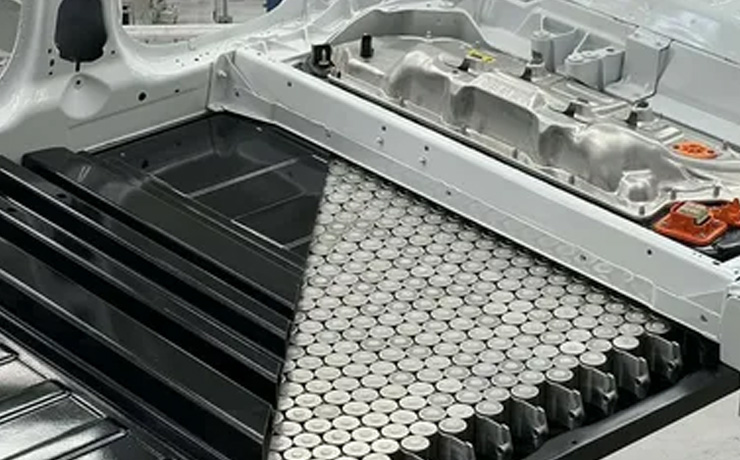
The traditional battery pack is constructed by welding multiple stamped parts, which suffers from stress concentration and sealing risks. Integrated die casting uses high pressure to inject molten metal into the mold to directly form complex structures:
Advantages: Reduces the number of parts by over 80%, reduces assembly errors; enhances structural stiffness by 30%, significantly improves torsional performance.
Challenges: Requires the development of high-flow aluminum alloy materials to avoid shrinkage defects, and optimize mold design to control residual stress.
2.2 Additive Manufacturing (3D Printing): Customization and Lightweighting
3D printing technology brings a revolutionary breakthrough in the design freedom of battery protection structures:
Topological optimization design: Generates biomimetic lightweight structures (such as lattice grids) based on finite element analysis (FEA), reducing weight by 40% while maintaining strength.
Multi-material printing: Combines metal and polymer materials to achieve functional gradient structures (such as high-strength metal anti-collision on the outside and heat-conductive polymer heat dissipation on the inside).
Fast prototyping: Shortens the development cycle from months to weeks, accelerating innovation and iteration.
2.3 Surface Treatment Process: Dual Assurance of Corrosion Resistance and Wear Resistance
Even if the material itself is corrosion-resistant, surface treatment is still a key step to enhance reliability:
Micro-arc oxidation (MAO): Forms a dense ceramic oxide layer on the aluminum alloy surface, with a salt spray corrosion resistance time exceeding 2000 hours, far exceeding traditional anodic oxidation.
Physical vapor deposition (PVD): Deploys diamond-like carbon (DLC) coatings, with a hardness of 20-40 GPa, significantly enhancing wear resistance and scratch resistance.
Laser cladding: Fuses wear-resistant alloy powder onto the metal surface, forming a pore-free coating suitable for high-friction environments (such as interface of battery swapping packs).
III. Reliability Enhancement: From Passive Protection to Active Safety
The innovation in materials and processes ultimately serves the reliability goals. The modern battery protection structure is shifting from a single protection approach to a multi-level safety system:
Prevention Layer: Absorbing collision energy through high-toughness materials and energy-absorbing structures to prevent deformation of the battery module.
Monitoring Layer: Integrating optical fiber sensors or piezoelectric films to monitor stress, temperature, and vibration in real time, and providing early warnings of potential failures.
Isolation Layer: Using aerogel or phase change materials (PCM) to isolate overheating batteries and prevent heat from spreading to adjacent modules.
Emergency Layer: Designing rapid pressure relief channels and fire-extinguishing microcapsules to release inert gas or fire-extinguishing agents in extreme situations.
Case: A research institution developed a composite material battery box, combining a CFRP shell with an internal PCM layer. In the puncture test, it successfully reduced the speed of heat runaway by 90%, while the weight of the box was reduced by 35% compared to the traditional solution.
IV. Future Outlook: Integration of Sustainability and Intelligence
With the advancement of the "carbon neutrality" goal, the innovation of battery protection structures will place greater emphasis on sustainability throughout the entire life cycle:
Recyclable materials: Develop shells based on recycled aluminum or biobased polymers to reduce the carbon footprint.
Modular design: Achieve rapid disassembly and material sorting through standardized interfaces, enhancing the recycling efficiency.
Digital twin technology: Utilize virtual simulation to optimize material formulations and process parameters, reducing the number of physical experiments.
At the same time, intelligence will become the core feature of the next generation of protection structures:
Self-diagnostic shells: Embed AI chips to analyze sensor data, dynamically adjust cooling strategies or issue maintenance alerts.
Energy collection function: Utilize piezoelectric materials to convert mechanical vibrations into electrical energy, powering the battery management system (BMS).
From high-strength aluminum alloys to composite materials, from integrated die-casting to 3D printing, the innovations in the external protection structure of batteries are continuously evolving along the path of material lightweighting - process precision - and function intelligence. These breakthroughs not only enhance the battery's survival ability in extreme environments, but also clear the safety obstacles for large-scale applications in fields such as electric vehicles and energy storage. In the future, with the deep integration of material science and manufacturing technology, the battery protection structure will move towards higher levels of reliability, sustainability, and intelligence, providing a solid foundation for global energy transformation.
(+86)400-990-6600
sales.lib@mikrouna.com