
Search
 English
Lithium-ion battery coated negative electrode rolls typically refer to negative electrode sheets formed by coating negative electrode slurry onto copper foil current collectors, drying the slurry, and then winding it up. It is located in the early stages of lithium battery manufacturing and is an important foundation for subsequent rolling, slitting, sheet making and assembly.
In lithium-ion battery manufacturing, "coating" is the process of uniformly applying the prepared electrode slurry to the surface of the current collector. The negative electrode typically uses copper foil as the current collector. Graphite or silicon-carbon negative electrode materials, conductive agents, binders, etc., are mixed with solvents to form a slurry, which is then coated onto the copper foil. After drying in an oven, the solvent evaporates, the coating forms a film, and finally, it is wound into a roll by a winding device. This coated and wound negative electrode sheet roll is often referred to in the industry as a "coated negative electrode roll".
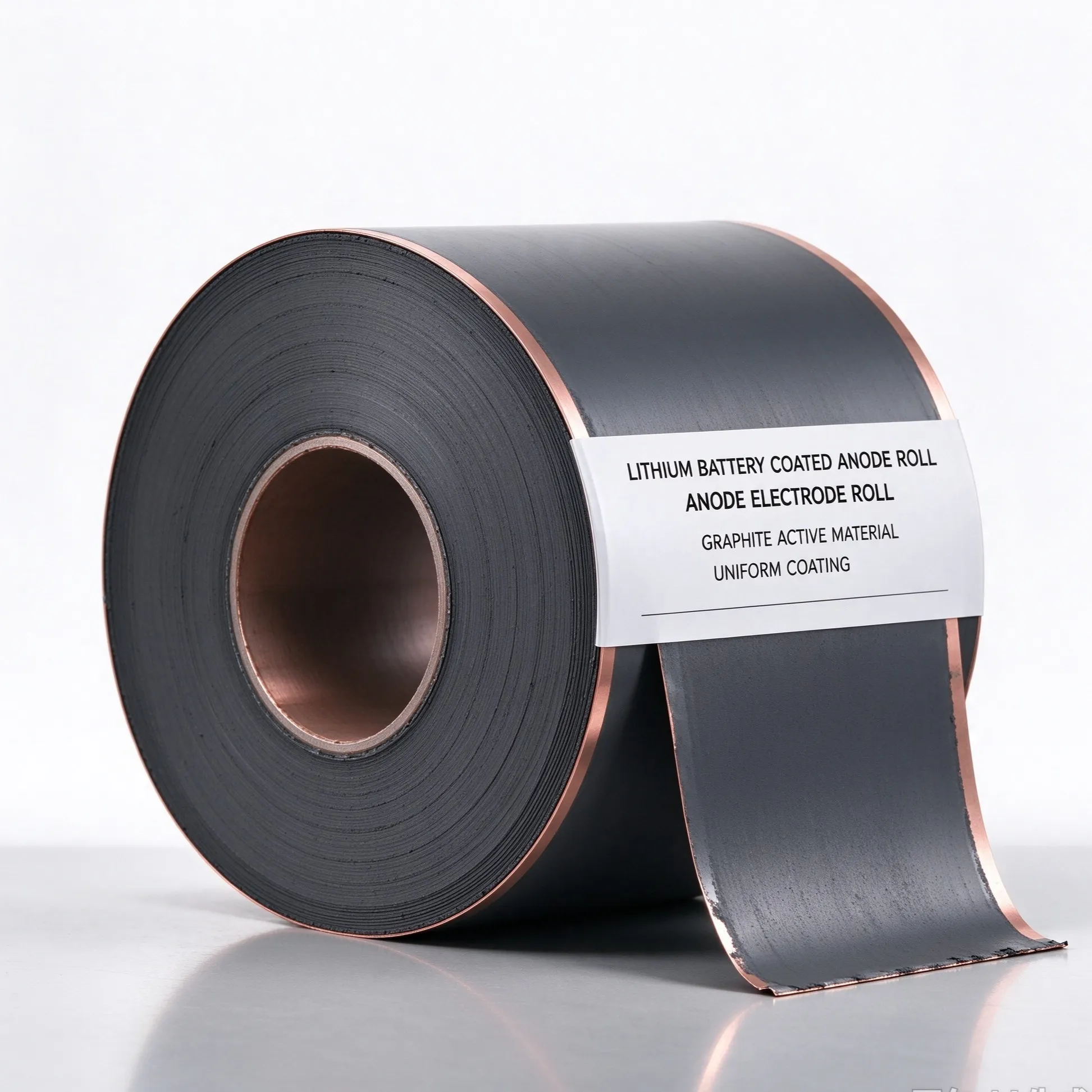
The front-end manufacturing of lithium batteries typically includes processes such as slurry preparation, coating, rolling, and slitting. The coated negative electrode roll is placed after slurry preparation and before rolling and slitting, playing a crucial role in connecting the two processes. The coating quality affects the areal density consistency of the electrode, coating adhesion, surface smoothness, and subsequent processing stability. The quality of winding is related to whether the roll material has problems such as wrinkles, misalignment, powdering, or sticking.
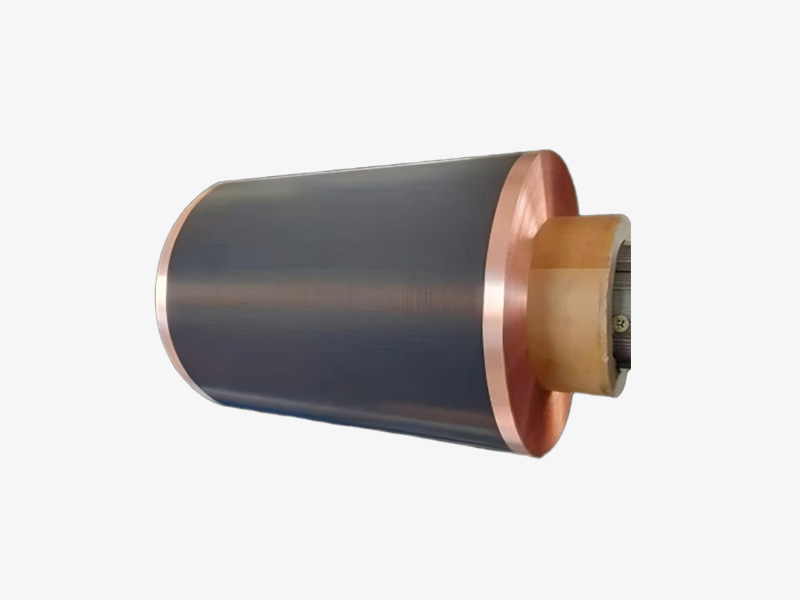
A typical coated negative electrode roll consists of a copper foil current collector and a coating of negative electrode active material, and is rolled up into a roll shape. The most common anode active material is graphite, while some systems use silicon-carbon materials. Conductive agents and binders are also added to the coating to improve electronic conductivity and ensure the stability of the electrode structure. Parameters such as slurry formulation, coating thickness, drying temperature, and winding tension all affect the final condition of the roll material.
When evaluating coated negative electrode rolls, the following are typically considered: areal density consistency, coating thickness uniformity, electrode surface defects, edge neatness, coating adhesion, winding tension, and roll end face neatness. Excessive fluctuations in areal density may affect the consistency of the battery cells; scratches, particles, exposed foil, or powder on the surface will interfere with subsequent processing; and wrinkles or misalignments during winding will result in waste of raw materials during slitting.
Overall, coated negative electrode rolls for lithium batteries are an important semi-finished product form in the manufacturing of negative electrode sheets. It connects slurry preparation with subsequent processing, and its quality is affected by many factors such as raw materials, equipment, process parameters, and on-site management.
(+86)400-990-6600
sales.lib@mikrouna.com