
Search
 English
In the manufacturing of lithium-ion batteries, the preparation of anode slurry is a critical upstream process. Taking aqueous anode systems as an example, the slurry preparation stage typically involves mixing active materials (such as graphite or silicon-carbon composites), conductive agents, binders, and solvents in a specific order. Carboxymethyl cellulose (CMC) is one of the common auxiliary materials used in this process.
Sodium carboxymethyl cellulose—commonly referred to in the industry simply as carboxymethyl cellulose and abbreviated as CMC—is a water-soluble polymer derived from natural cellulose through chemical modification. While the sodium salt form is the standard for industrial applications in lithium batteries, lithium carboxymethyl cellulose (CMC-Li) is an emerging area of research; CMC-Li can release lithium ions during the initial charge-discharge cycle, thereby compensating for some irreversible capacity loss. Although CMC itself does not provide capacity or directly participate in charge-discharge reactions, it serves three primary functions within the anode slurry:
When dissolved in water, CMC increases the viscosity of the slurry, preventing the rapid settling of solid particles and maintaining the slurry's relative stability during storage and coating.
CMC molecular chains adsorb onto the surfaces of particles such as graphite and silicon; through electrostatic repulsion and steric hindrance, they reduce particle agglomeration, resulting in a more uniform distribution of conductive agents and active materials.
While CMC possesses inherent binding capabilities, it typically does not handle the entire binding function on its own. It is commonly used in conjunction with SBR: CMC provides thickening and dispersion, while SBR offers flexibility and adhesion, working synergistically to improve the adhesion of the electrode coating.
CMC and SBR are a common pairing in aqueous slurries for graphite anodes. CMC serves to adjust rheological properties and dispersion, while SBR binds particles together and prevents material shedding from the electrode sheet during winding or charge-discharge cycles. Using CMC alone results in a brittle film with insufficient flexibility, making it prone to cracking during winding or cycling; conversely, using SBR alone often leads to slurry sedimentation or uneven coating. Therefore, using them in combination is the standard practice.
For silicon-based anodes, the role of CMC is particularly significant. Silicon undergoes substantial volume changes during charge-discharge cycles, which can easily lead to particle pulverization and the structural breakdown of the electrode sheet. The carboxyl groups in CMC can form hydrogen bonds with the hydroxyl groups on the silicon surface, maintaining inter-particle connections, while the SBR elastomer provides a buffer against volume expansion. Naturally, practical formulations usually require optimization through the inclusion of other materials as well.
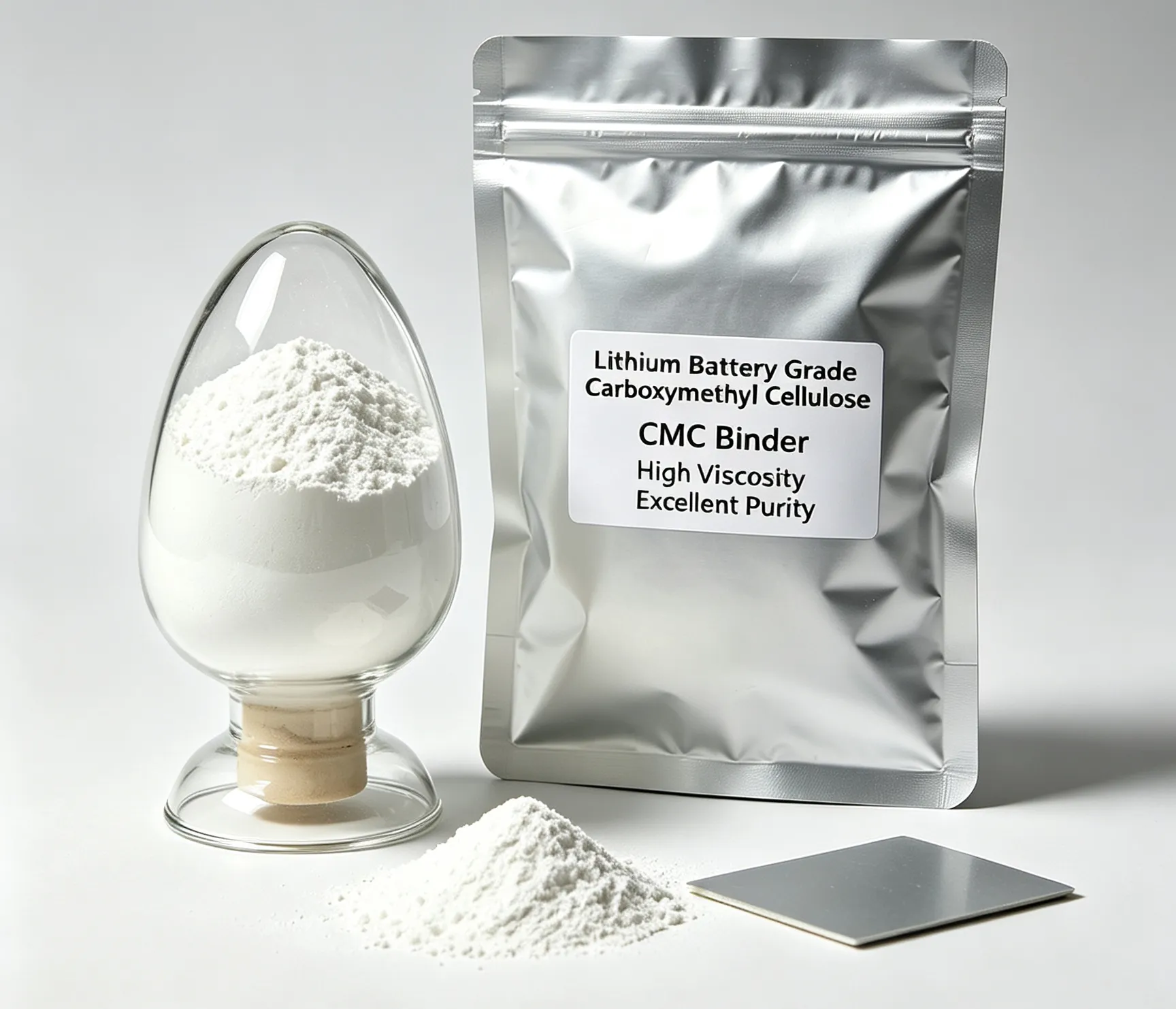
Although CMC is an auxiliary material, its properties influence battery manufacturing. Key factors include:
●Degree of substitution: Affects solubility, viscosity, and interaction with particle surfaces;
●Molecular weight and viscosity: Affect slurry rheology, coating stability, and electrode sheet uniformity;
●Purity and impurities: Impurities such as metal ions and chlorides can adversely affect battery performance;
●Moisture content and pH: CMC is sensitive to pH; deviations from the optimal range affect solubility and the degree of carboxyl group ionization, potentially leading to molecular chain degradation and abnormal slurry viscosity. Excessive moisture in the powder causes clumping and hinders dissolution and dispersion, easily leading to "fish-eye" defects in the slurry;
●Compatibility with SBR and conductive agents: Different formulations require specific rheological behaviors.
Therefore, CMC is not a component that can simply be added without consideration; it must be matched to the overall formulation.
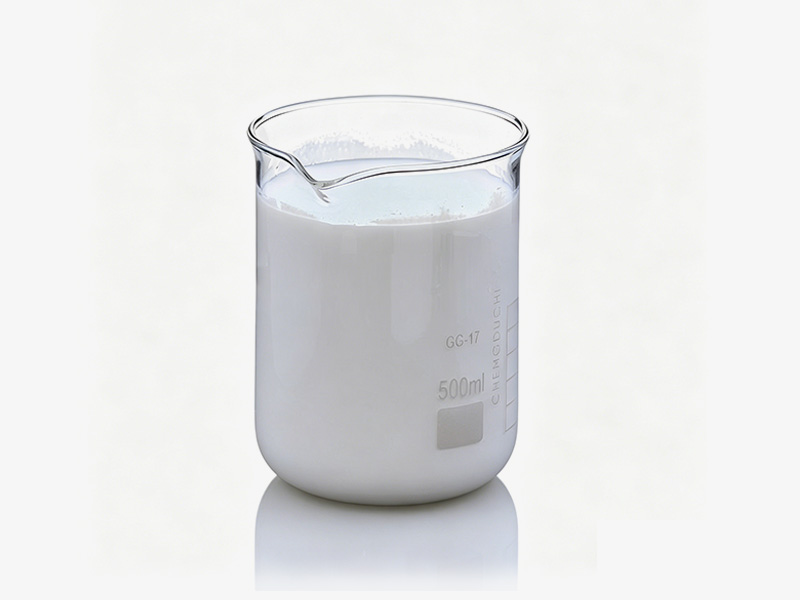
Carboxymethyl cellulose (sodium salt) for lithium batteries is a water-soluble polymeric additive primarily used in aqueous anode slurries, where it functions as a thickening, dispersing, and auxiliary binding agent. It is typically used in conjunction with SBR to facilitate the formation of uniform, stable slurries and electrode sheets. Although CMC does not directly contribute to capacity, it has a tangible impact on coating quality, electrode adhesion, and battery consistency.
Prev: None
(+86)400-990-6600
sales.lib@mikrouna.com