
Search
 English
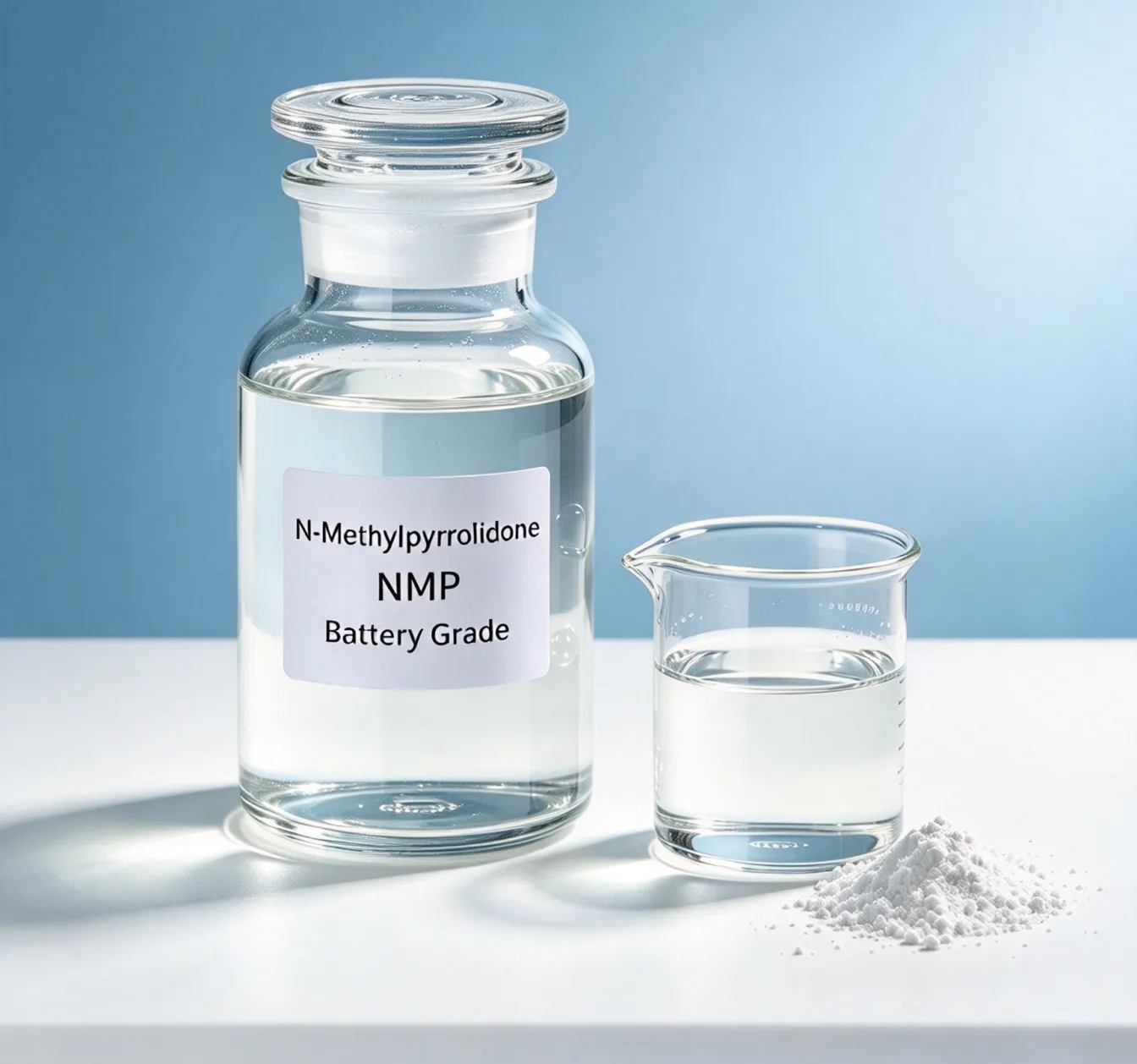
N-methylpyrrolidone is a frequently mentioned organic solvent in lithium-ion battery manufacturing. Although it does not directly participate in the battery's charge-discharge reactions, nor does it serve as an active material for the cathode or anode, it plays a crucial role in the production of cathode electrodes. Simply put, NMP is primarily used to dissolve the binder and disperse the cathode materials, helping to form a slurry suitable for coating.
The chemical name of NMP is N-methylpyrrolidone. It is a colorless to slightly yellow transparent liquid at room temperature, has strong polarity, and is an aprotic solvent. NMP is miscible with various solvents—such as water, alcohols, and ethers—and possesses a high boiling point of approximately 202°C, with a relatively controllable evaporation rate.
These properties make NMP an excellent solvent across numerous industrial sectors, including polymer materials, electronics cleaning, pharmaceutical synthesis, and lithium-ion battery manufacturing. However, within the lithium-ion battery industry, its primary application lies in the preparation of cathode slurry.
Lithium-ion battery cathode electrodes are typically composed of cathode active materials, conductive agents, and binders. Common cathode active materials include lithium iron phosphate (LFP), ternary materials (such as NMC), and lithium cobalt oxide (LCO); conductive agents often include carbon black and carbon nanotubes; and the binder commonly used is polyvinylidene fluoride (PVDF).
NMP serves three main functions in this context:
1. Dissolving the PVDF binder
PVDF is not easily soluble in water but dissolves well in NMP. Once dissolved, the PVDF can uniformly coat the cathode particles, forming a stable binding network after drying.
2. Dispersing cathode materials and conductive agents
Through mixing, NMP enables the active materials, conductive agents, and binder to form a homogeneous slurry. The uniformity of this dispersion directly affects the consistency and conductivity of the electrode, as well as overall battery performance.
3. Forming a coatable slurry
The cathode slurry must be evenly coated onto aluminum foil. The fluidity and volatility characteristics provided by NMP make the coating process easier to control and result in a relatively smooth electrode coating after drying.
NMP is an industrial solvent that is not entirely harmless. It can irritate the skin, eyes, and respiratory tract; consequently, occupational protection measures are essential to address risks associated with long-term or high-concentration exposure. Regulatory frameworks in certain countries and regions classify NMP as a substance with reproductive toxicity and impose specific requirements regarding workplace exposure and emissions.
In lithium-ion battery manufacturing plants, processes involving NMP typically require the use of enclosed equipment, local exhaust systems, personal protective equipment (PPE), and solvent recovery units. For enterprises, controlling NMP volatilization, leakage, and residual levels is not merely an environmental issue; it is also critical for ensuring employee health and operational safety.
Furthermore, the level of residual NMP in electrode sheets must be kept within acceptable limits. Although the majority of NMP evaporates and is recovered during the drying stage, improper process control can lead to excessive residual solvent. Additionally, irregularities in the drying process can introduce moisture; both factors can adversely affect the electrochemical performance of the battery.
N-Methylpyrrolidone (NMP) is a common polar solvent in the manufacture of lithium-ion battery cathodes. Its main function is to dissolve PVDF, disperse cathode materials, and form a coatable slurry. While it does not directly determine battery energy density, it influences electrode quality and manufacturing efficiency. At the same time, the industry attaches great importance to issues regarding the safety, environmental impact, and recycling of NMP.
(+86)400-990-6600
sales.lib@mikrouna.com