
Search
 English
In lithium-ion batteries, the positive electrode, negative electrode, separator, and electrolyte are often the focus of attention, while the current collector is easily overlooked. The copper foil is the key current collector on the negative electrode side. It does not directly store lithium, but it does affect the battery's internal resistance, rate performance, cycle life, and manufacturing yield.
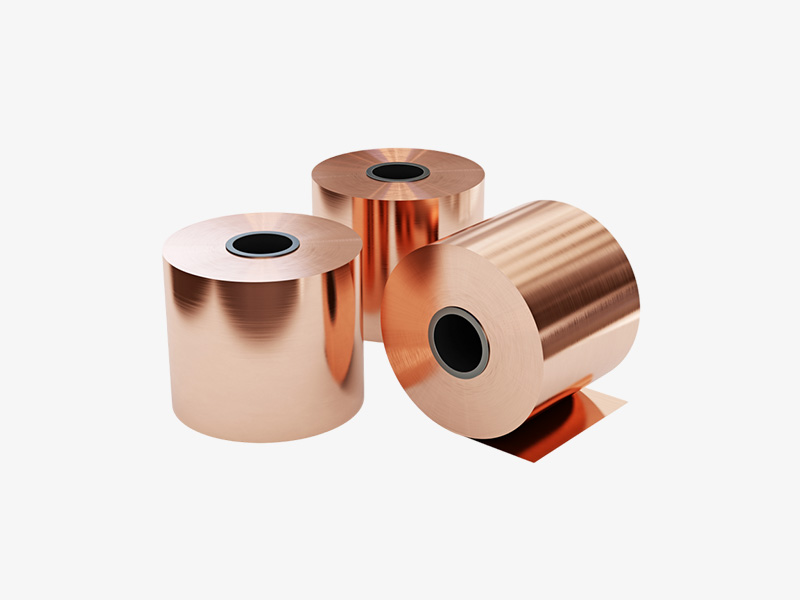
Lithium-ion battery copper foil is an ultra-thin copper material used for the anode of lithium-ion batteries. It typically features high copper purity—generally exceeding 99.5%—and comes in common thicknesses such as 6, 8, 10, and 12 microns. As requirements for battery energy density rise, some power batteries have begun utilizing thinner copper foils ranging from 4.5 to 6 microns, with future trends pointing toward thicknesses as low as 3–4 microns.
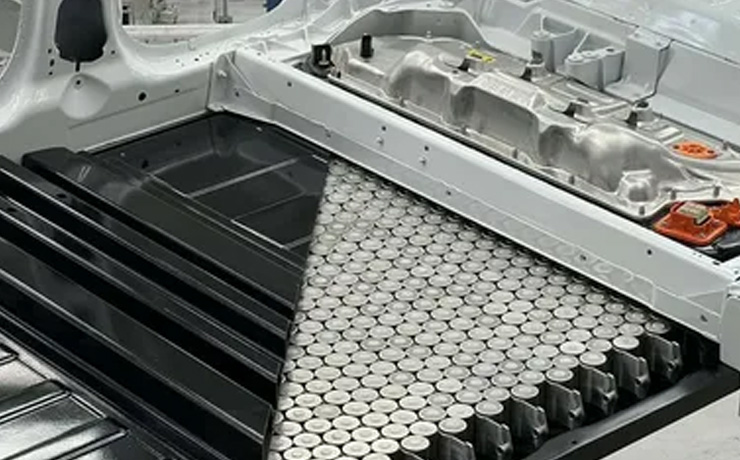
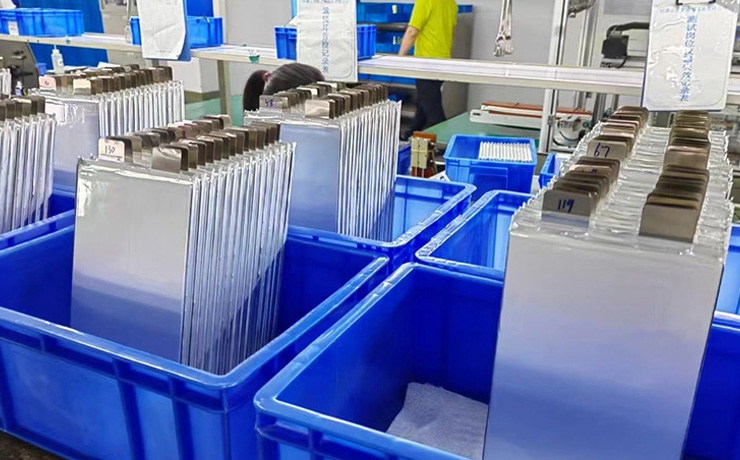
During battery manufacturing, anode active materials (such as graphite or silicon-carbon composites) are mixed with conductive agents and binders to form a slurry; this is coated onto the copper foil and subsequently processed through drying, calendering, and slitting to produce the anode electrode sheet. During charge and discharge cycles, electrons are collected by the copper foil and conducted to the external circuit.
This is primarily due to electrochemical stability. The negative electrode of a lithium-ion battery operates at a low potential; at this potential, aluminum tends to form an alloy with lithium, making it unsuitable as a negative electrode current collector. In contrast, copper remains relatively stable within the negative electrode's potential range, making it the standard choice for the negative current collector.
The positive electrode operates at a higher potential; aluminum forms a dense oxide layer on its surface and remains stable within a specific voltage range, so aluminum foil is typically used for the positive electrode. Copper foil and aluminum foil correspond to the negative and positive electrodes, respectively, and generally cannot be interchanged arbitrarily.
●Current collection and conduction: Collects and conducts electrons generated by the anode material, thereby reducing internal battery resistance.
●Substrate for anode material: Provides a base for coating the anode slurry.
●Heat dissipation support: Copper’s high thermal conductivity helps dissipate heat.
●Mechanical support: Maintains the structural integrity of the electrode sheet during coating, calendering, winding, or stacking processes.
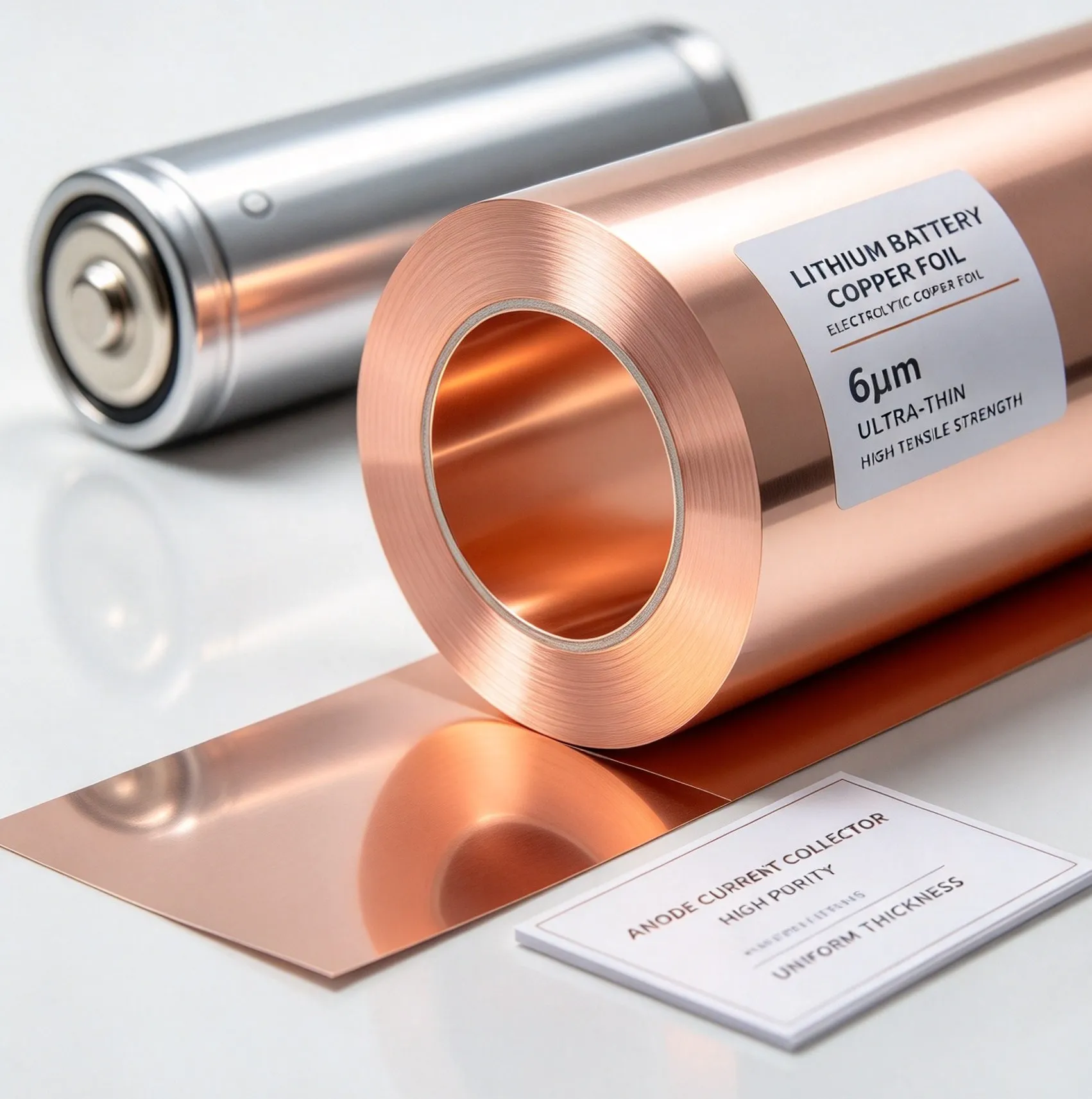
Common indicators used to evaluate copper foil for lithium batteries include:
●Thickness: Affects energy density, weight, and cost;
●Tensile strength and elongation: Affect the likelihood of strip breakage during coating and winding;
●Roughness: Affects the adhesion of anode materials and peel strength;
●Resistivity: Affects internal battery resistance and rate performance;
●Oxidation resistance: Affects storage and cycling stability;
●Pinhole count, flatness, and cleanliness: Affect manufacturing yield and safety.
Thinner copper foil can reduce the battery's overall weight and volume, helping to increase energy density. However, excessive thinning leads to issues such as reduced strength, an increased risk of strip breakage, and a narrower processing window. Factors such as surface roughness, electrical conductivity, and oxidation resistance also influence the battery's internal resistance, cycle life, and safety performance.
Lithium-ion battery copper foil serves as the anode current collector and is a crucial fundamental material in lithium-ion batteries. Although it does not directly participate in lithium storage, it performs essential functions such as electrical conduction, load-bearing, heat dissipation, and structural support.
(+86)400-990-6600
sales.lib@mikrouna.com