
Search
 English
In lithium-ion battery manufacturing, moisture and metal ions are often regarded as "invisible enemies." From slurry preparation to equipment cleaning, "deionized water" is frequently mentioned across various stages of the process. But what exactly is deionized water, and how does it differ from ordinary purified water or distilled water?
Deionized water is water from which ionic impurities have been removed through specific processes. Common production methods include reverse osmosis, ion exchange, electrodeionization, and polishing mixed-bed systems.
However, it is important to note that deionized water is not "completely pure." While it primarily removes ions, it does not necessarily eliminate organic matter, particulates, bacteria, or microorganisms. Consequently, in the lithium battery industry, deionized water often serves merely as the base for "process water"; specific quality requirements depend on parameters such as TOC (Total Organic Carbon), particle counts, and metal ion concentrations.
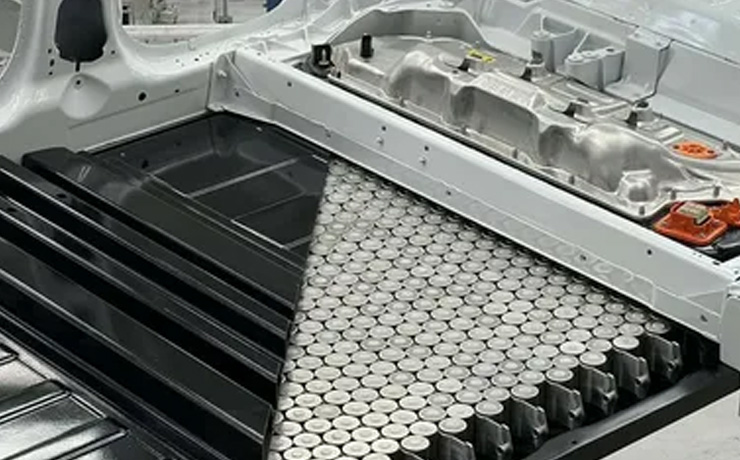
Lithium batteries are highly sensitive to impurities. If metal ions—such as Na, K, Fe, Cu, and Ni—present in water are introduced into battery materials or electrode sheets, they can compromise the stability of the Solid Electrolyte Interphase (SEI) layer, increase self-discharge, and even lead to capacity degradation or micro-short circuits. The value of deionized water lies in minimizing the introduction of these ionic impurities.
At the same time, lithium batteries are also vulnerable to moisture. LiPF6, a common component of electrolytes, can react with water to form substances such as HF; this damages the electrode interface, leading to gas generation and performance degradation. Therefore, even when deionized water is used in certain manufacturing steps, subsequent processes—such as drying—are essential to ensure moisture levels remain within the required limits.
Deionized water is primarily used in the following scenarios during lithium battery production:
1. Preparation of aqueous slurries: Deionized water is used as a dispersion medium—combined with binders, conductive agents, and other components—to create slurries for certain anodes (specifically graphite anodes) and a very limited number of specialized cathode R&D processes.
2. Cleaning of equipment and tooling: Deionized water is used to clean equipment such as coaters, roll presses, and slitters, helping to minimize ionic residue.
3. Laboratory and testing applications: Cleaning glassware, preparing solutions, material testing, etc.
4. Certain auxiliary processes: Such as cleaning casings, separators, or tooling, depending on the specific process design.
It should be noted that solvent-based (oily) cathode systems typically utilize organic solvents like NMP rather than water; furthermore, the electrolyte itself must be free of water. Deionized water is neither an electrolyte nor a battery "additive."
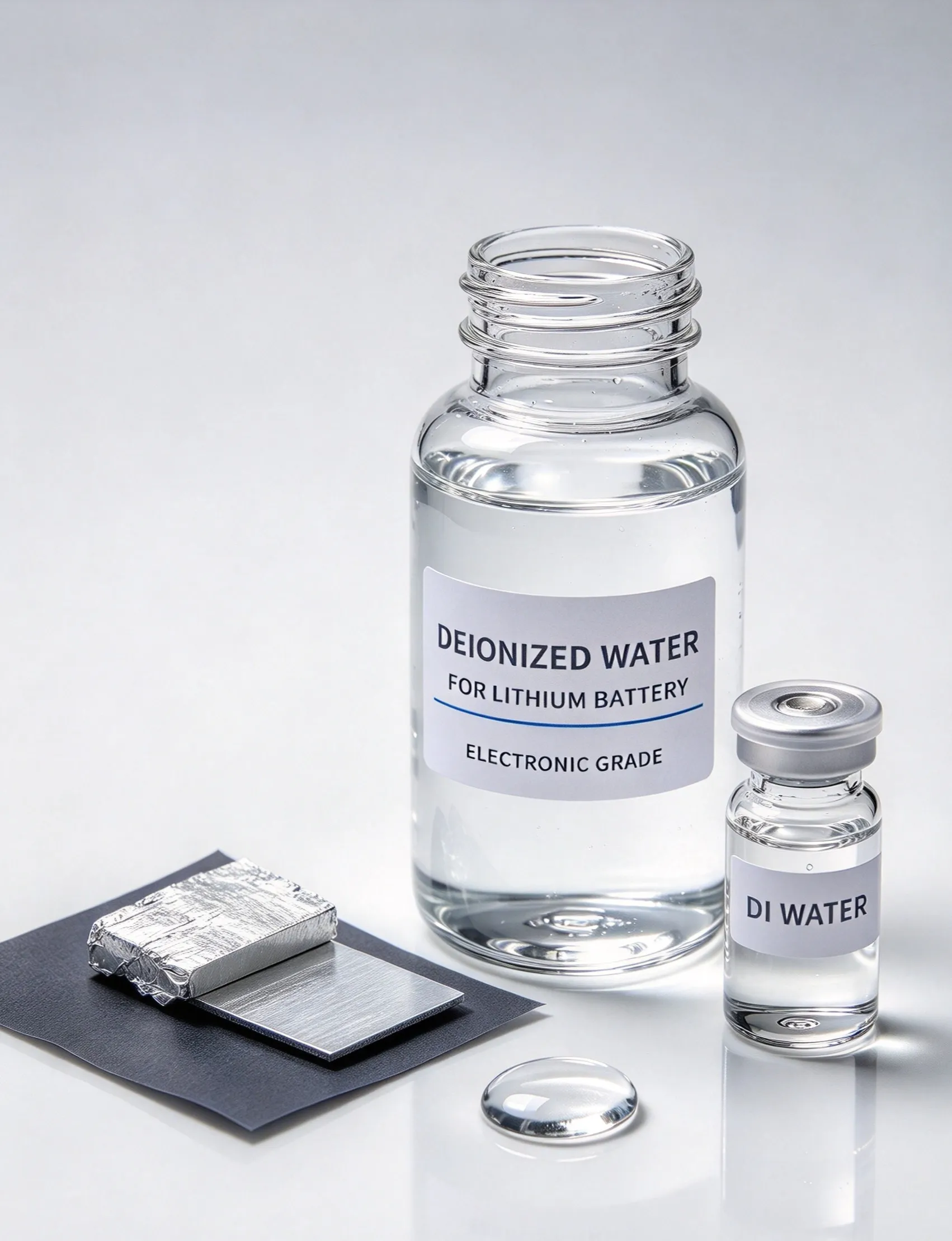
There is no unified standard for deionized water used in lithium battery manufacturing; requirements vary by company and process step. Common parameters of interest include:
●Resistivity/Conductivity: Reflects ion content;
●TOC (Total Organic Carbon): Reflects organic contamination;
●Particulates: May affect coating and interface properties;
●Metal ions: Such as Na, K, Fe, Cu, etc.;
●Microorganisms and bacteria: Affect storage stability and cleaning effectiveness;
●pH, silica content, etc.
A typical deionized water system generally comprises units such as pretreatment, reverse osmosis, ion exchange or EDI, ultraviolet sterilization, a polishing mixed-bed, and ultrafiltration. During operation, measures must be taken to prevent secondary contamination from piping and storage tanks and to avoid stagnant water zones; additionally, conductivity, TOC, and particle counts require regular online monitoring.
Deionized water for lithium batteries is, in essence, controlled process water. Its primary function is not to "magically boost performance," but rather to minimize the introduction of ionic impurities and contaminants, thereby meeting the moisture control requirements of lithium battery manufacturing.
(+86)400-990-6600
sales.lib@mikrouna.com