English
May 06,2026
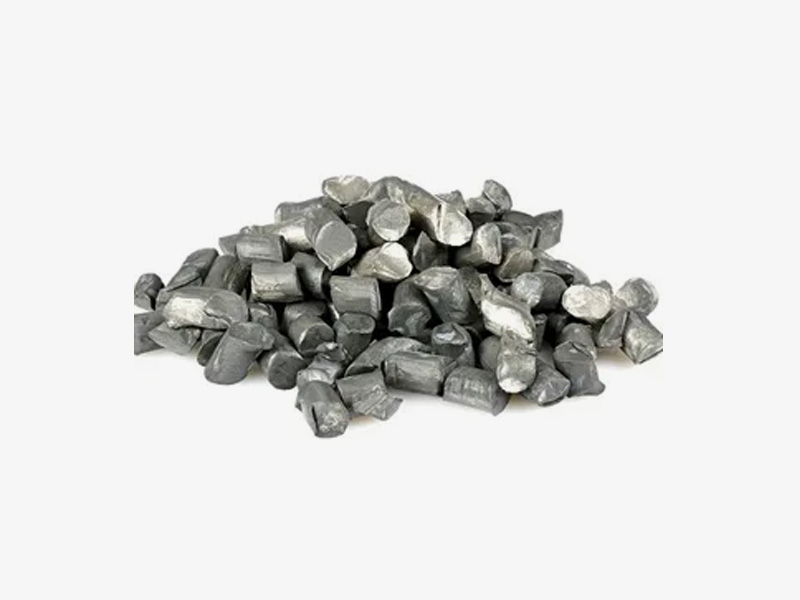
Lithium metal anode: Lithium metal ingots
Lithium metal ingots are blocky raw materials made from high-purity metallic lithium. As the least dense and most electrochemically active silvery-white metal in nature, it is mainly used in aerospace alloys, the nuclear industry, and as a core material for solid-state batteries and lithium-sulfur batteries.
Explore more
Apr 30,2026
Copper-lithium composite strip
Copper-lithium composite strips are a novel type of battery negative electrode current collector material, mainly composed of metallic copper and lithium strips through mechanical processing or rolling. It can directly provide lithium to the battery, and features improved lithium-ion deposition, increased battery energy density, and longer cycle life.
Explore more
May 07,2026
PET positive electrode composite aluminum foil
The PET positive electrode composite aluminum foil is a new type of composite current collector material based on polyethylene terephthalate (PET) as the substrate. It deposits a metal aluminum layer on both the upper and lower surfaces of the substrate through vacuum evaporation technology, forming a "aluminum-PET-aluminum" sandwich structure. It is specifically designed for the positive electrode of lithium-ion batteries.
Explore more
May 07,2026
PET negative electrode composite copper foil
The PET negative electrode composite copper foil is a composite current collector material made by using polyethylene terephthalate (PET) film as the base material and depositing metal copper layers on both sides. It is specifically designed for the negative electrode of lithium-ion batteries.
Explore more
May 07,2026
Positive electrode sheet of the battery cell
The positive electrode sheet is one of the core components of a battery. Together with the negative electrode sheet, it forms the electrochemical reaction area of the battery, responsible for providing and receiving electrons during the charging and discharging process of the battery, and achieving the conversion between chemical energy and electrical energy.
Explore more
May 07,2026
Negative electrode sheet of the battery cell
The battery electrode sheet is the core component of a battery, playing a crucial role in conducting electricity and facilitating electrochemical reactions. It consists of a positive electrode sheet and a negative electrode sheet, which are separated and connected by an electrolyte to form the electrochemical reaction area of the battery, enabling the conversion between chemical energy and electrical energy.
Explore more
Apr 30,2026
Diaphragm
By adopting the bidirectional synchronous stretching technology, the mechanical strength is high and balanced, with uniform pore structure and good consistency. Produced by the blow molding method (optimized relative to the extrusion method), it has a unidirectional microporous structure and excellent thermal closure performance. Coated with nano-alumina/bombshell, etc., it significantly improves heat resistance, dimensional stability and electrolyte wettability. The coating has strong adhesion to the electrode sheet, which can reduce the defective rate of the cell during encapsulation and improve the interface contact. Using a mixed coating of PVDF/aramid and ceramics, it combines high heat resistance, excellent adhesion and cost efficiency.
Explore more

Apr 30,2026
Solid-state electrolyte membrane
The solid-state electrolyte membrane is the core functional layer of a solid-state battery. It replaces the traditional liquid electrolyte and performs the dual functions of conducting lithium ions and isolating electrons.
Explore more
Apr 30,2026
Electrode Tab Insulation Tape
Electrode Tab Insulation Tape is a special insulating and protective tape specifically designed for lithium battery manufacturing. It is primarily attached to the metal tabs of the battery, and its core functions are to prevent metal burrs from puncturing the separator and causing a short circuit, to protect the solder joints from electrolyte corrosion, and to provide fixation and insulation.
Explore more
May 06,2026
Lithium battery aluminum strip
In lithium-ion batteries, the aluminum strip primarily serves as the positive electrode current collector, collecting the current generated by the active material and outputting it externally. Furthermore, it plays a crucial role in the electrode framework, thermal conductivity, and structural support.
Explore more
Apr 30,2026
Aluminum-nickel composite strip
Aluminum-nickel composite strips are bimetallic conductive materials that tightly bond aluminum and nickel through a special process. They combine the lightweight and high conductivity of aluminum with the corrosion resistance, high strength, and excellent weldability of nickel.
Explore more
May 06,2026
Pure nickel strip
The core function of pure nickel strip is as a highly conductive and corrosion-resistant connecting conductor. Due to its extremely low resistivity and low heat generation, it is often used as a tab connector or busbar in power battery packs or energy storage systems to ensure the safe transmission of high currents and reduce energy loss.
Explore more