English
Apr 30,2026
Battery Aluminum Foil
Thickness: The mainstream thickness is 10-20 micrometers (μm). Some enterprises have achieved mass production at 8 μm. In the future, it may be reduced to 6 μm. The thickness deviation should be controlled within ±2% to ensure battery consistency. Mechanical properties: Tensile strength ≥ 180 MPa. In some scenarios, it requires ≥ 200 MPa or even 300 MPa, while maintaining ≥ 3% elongation to meet the requirements of high compact density.
Explore more
May 07,2026
The coated positive electrode roll
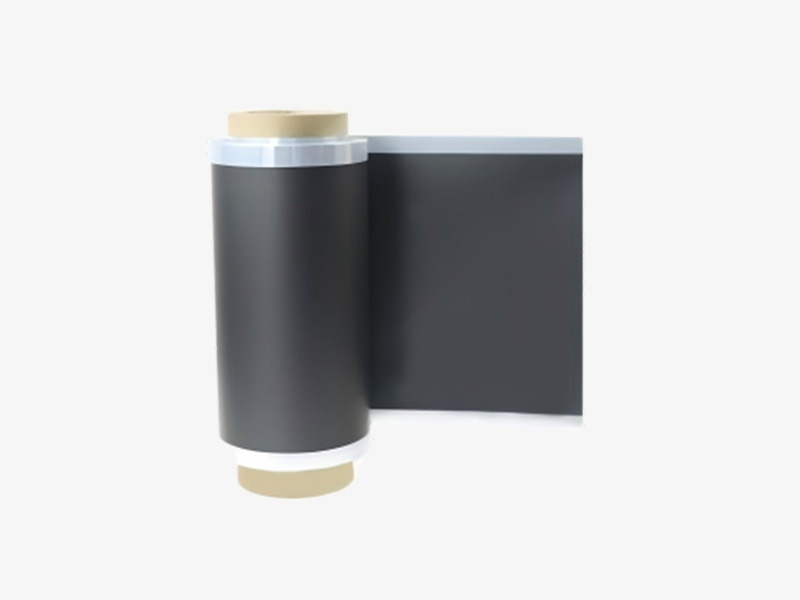
Carbon-coated aluminum foil.This is a key advanced material that introduces a carbon coating layer on the positive electrode current collector aluminum foil. Its purpose is to address the conductive and adhesive bottlenecks on the positive electrode side, thereby significantly enhancing the power density, cycle life, and safety of lithium batteries. It complements the carbon-coated copper foil and jointly drives the boundaries of lithium battery performance.
Explore more
May 07,2026
The coated negative electrode roll
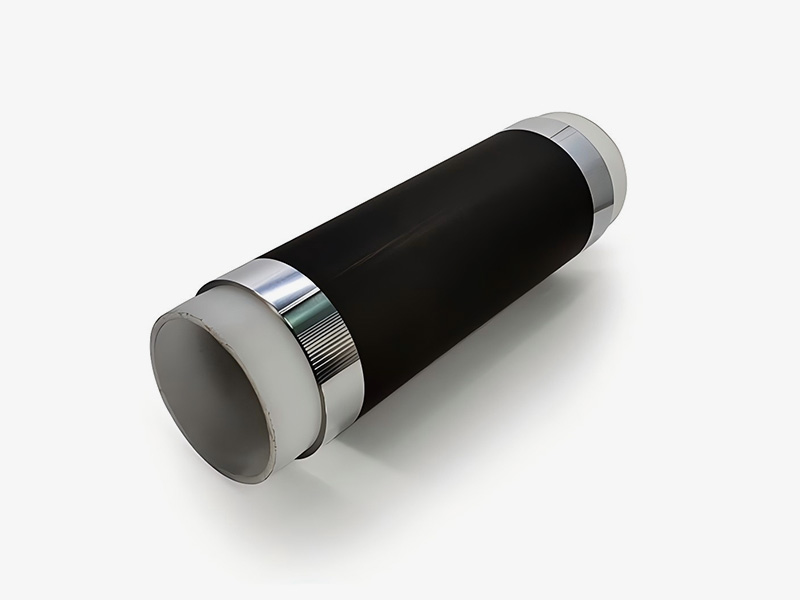
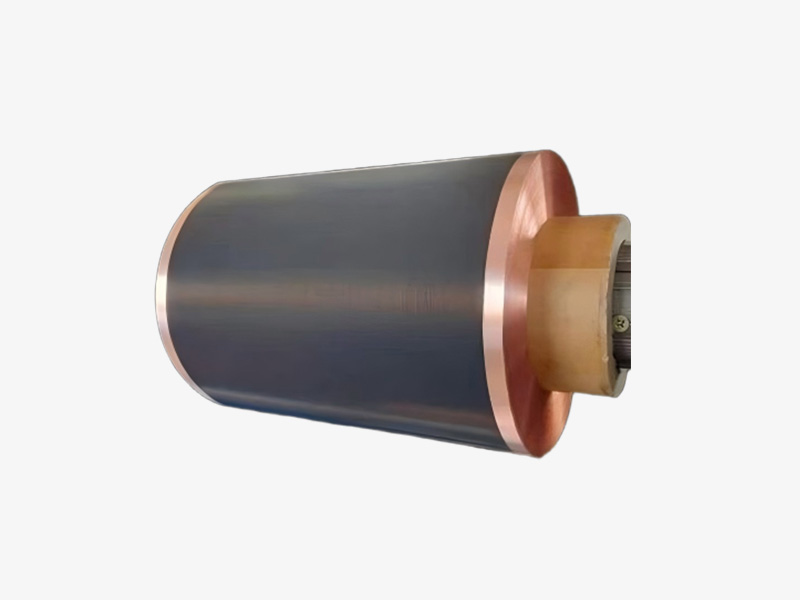
Carbon graphite plate electrode of the dual-coated electrode material for the negative electrode of the battery
Explore more
May 06,2026
Lithium metal anode: Lithium metal casting
Our lithium waste recycling and melting process represents the latest technological direction in the circular economy of battery materials. This process recovers and reuses various lithium metal wastes (including leftover materials from the production process, lithium metal from scrapped batteries, etc.) through vacuum melting technology, achieving the recycling of resources and a significant reduction in costs.
Explore more
Apr 30,2026
Copper-lithium composite strip, 40-100 microns
Lithium metal strips are the negative electrode materials in fields such as lithium battery energy storage and power batteries. With their high specific capacity and high electrochemical activity, they provide excellent energy density and charging-discharging performance for the battery cells, meeting the lightweight and miniaturization design requirements of various pouch and cylindrical lithium battery cells, and improving the overall integration efficiency and space utilization of the battery.
Explore more
May 07,2026
PET positive electrode composite aluminum foil
The PET positive electrode composite aluminum foil is a new type of composite current collector material based on polyethylene terephthalate (PET) as the substrate. It deposits a metal aluminum layer on both the upper and lower surfaces of the substrate through vacuum evaporation technology, forming a "aluminum-PET-aluminum" sandwich structure. It is specifically designed for the positive electrode of lithium-ion batteries.
Explore more
May 07,2026
PET negative electrode composite copper foil
The PET negative electrode composite copper foil is a composite current collector material made by using polyethylene terephthalate (PET) film as the base material and depositing metal copper layers on both sides. It is specifically designed for the negative electrode of lithium-ion batteries.
Explore more
May 07,2026
Positive electrode sheet of the battery cell
The positive electrode sheet is one of the core components of a battery. Together with the negative electrode sheet, it forms the electrochemical reaction area of the battery, responsible for providing and receiving electrons during the charging and discharging process of the battery, and achieving the conversion between chemical energy and electrical energy.
Explore more
May 07,2026
Electrode sheet of the battery cell
The battery electrode sheet is the core component of a battery, playing a crucial role in conducting electricity and facilitating electrochemical reactions. It consists of a positive electrode sheet and a negative electrode sheet, which are separated and connected by an electrolyte to form the electrochemical reaction area of the battery, enabling the conversion between chemical energy and electrical energy.
Explore more
Apr 30,2026
Diaphragm
By adopting the bidirectional synchronous stretching technology, the mechanical strength is high and balanced, with uniform pore structure and good consistency. Produced by the blow molding method (optimized relative to the extrusion method), it has a unidirectional microporous structure and excellent thermal closure performance. Coated with nano-alumina/bombshell, etc., it significantly improves heat resistance, dimensional stability and electrolyte wettability. The coating has strong adhesion to the electrode sheet, which can reduce the defective rate of the cell during encapsulation and improve the interface contact. Using a mixed coating of PVDF/aramid and ceramics, it combines high heat resistance, excellent adhesion and cost efficiency.
Explore more
Apr 30,2026
Solid-state electrolyte membrane
The solid-state electrolyte membrane is the core functional layer of a solid-state battery. It replaces the traditional liquid electrolyte and performs the dual functions of conducting lithium ions and isolating electrons.
Explore more
Apr 30,2026
Adhesive tape
Adhesive tape is a strip-shaped composite material consisting of a base material and a adhesive. By applying a slight pressure, it can achieve reliable connections between objects, and is widely used in packaging, electronics, automotive manufacturing, construction, healthcare, and daily household items.
Explore more